Table of Contents
- A Village Preserved by Principle
- The Natural Setting
- Walking and Hiking from Fornalutx
- Getting There and What to Combine
- The Property Perspective
- FAQs
- Un pueblo preservado por convicción
- El entorno natural
- Senderismo desde Fornalutx
- Cómo llegar y qué combinar
- La perspectiva inmobiliaria
- Preguntas frecuentes
- Ein Dorf, das aus Prinzip bewahrt wird
- Die natürliche Umgebung
- Wandern und Wanderwege ab Fornalutx
- Anreise und Kombination mit anderen Zielen
- Die Immobilienperspektive
- Häufig gestellte Fragen
Fornalutx: National Geographic Names It Spain’s Most Beautiful Village This April
There are places on this island that stop you in your tracks. Fornalutx is one of them. This spring, the rest of the world has been officially reminded of that fact. National Geographic has named Fornalutx the most beautiful village in Spain to visit in April 2026, adding this Mallorcan gem to its monthly list of outstanding Spanish municipalities — a recognition that comes as no surprise to anyone who has spent time wandering its stone-paved lanes.
Nestled in the heart of the Serra de Tramuntana, just a few kilometres from Sóller in the northwest of the island, Fornalutx sits within a UNESCO World Heritage Site. That designation came in 2011, recognising the Serra’s remarkable cultural landscape, shaped over centuries by the interaction of human settlement and mountain terrain. The village is home to fewer than 700 inhabitants and has changed very little in its outward appearance for hundreds of years. That is precisely the point.
A Village Preserved by Principle
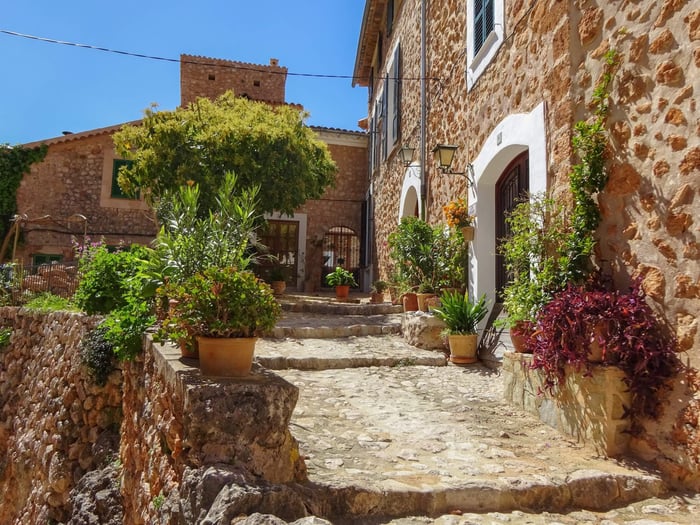
What sets Fornalutx apart from so many other picturesque corners of Spain is not simply its beauty, but the determination with which that beauty has been protected. Strict planning regulations have governed construction and renovation here for decades, ensuring that the village’s stone facades, red-tiled roofs, green-shuttered windows and cobbled stairways remain intact. Walking through the main street in April — when the surrounding orange and lemon groves are heavy with fruit and the mountain light falls at its most flattering angle — it is easy to understand why photographers and artists have made the pilgrimage here for generations.
The Church of the Nativity of the Mother of God stands at the heart of the village, a medieval structure that evolved from Gothic origins to its present form, with Baroque influences visible throughout. Its organ dates from 1584 and an elaborate sundial decorates the exterior. The 17th-century defence tower at the town hall is another landmark, a reminder that this peaceful valley was not always so tranquil. Plaça d’Espanya, the main square, is the natural gathering point — a handful of cafe terraces spill out beneath the old stone buildings, the ideal spot to sit with a coffee and let the pace of the village wash over you.
This conservation effort has been recognised on numerous occasions. Fornalutx won the National Prize for the most beautiful village in Spain in 1983 and is a longstanding member of the association of Spain’s most beautiful villages. The current National Geographic spotlight is simply the latest in a long series of well-earned acknowledgements.
The Natural Setting
The setting of Fornalutx is as striking as the village itself. It sits in the Sóller Valley at around 150 metres altitude, looking out over orange and lemon groves that have fed and defined the local economy for centuries. Above it, the mountains of the Serra de Tramuntana climb steadily to Puig Major — at 1,445 metres, the highest point in Mallorca — and the views from the natural vantage points dotted around the village are spectacular, particularly in the late afternoon when the western light turns the stone the colour of warm honey.
April is perhaps the finest month to be here. The countryside is at its greenest from the winter rains, the citrus groves are in full fragrance, wildflowers line the mountain paths, and the summer crowds are still weeks away. The Mirador de Ses Barques viewpoint, reachable on foot in around three hours from the village, offers a panorama that takes in the entire arc of the Sóller bay. It is, by any measure, one of the finest views on the island.
Walking and Hiking from Fornalutx
For those who prefer to explore on foot, Fornalutx is one of the best starting points on the island. The long-distance GR221 — the Dry Stone Route — passes directly through the village, running the full length of the Serra de Tramuntana from Andratx in the southwest to Pollènsa in the north. Shorter, well-marked routes connect Fornalutx to Sóller through the valley (around one hour each way) and to Biniaraix through the orange groves (around two hours). The circular village walk starting from Plaça d’Espanya takes around four hours and rewards walkers with views across the valley and down to the coast.
These are serious mountains that reward serious walkers, but there are gentler options too. The path down to Sóller along the valley floor is one of the more pleasant walks on the island, manageable for most fitness levels and rewarded at the end by one of Mallorca’s most charming towns — with its Modernist church facade, its artisan ice cream, and the famous wooden tram that has connected Sóller to its port since 1912.
Getting There and What to Combine
Fornalutx sits roughly 33 kilometres from Palma, making it a straightforward drive of around 50 minutes along the Ma-11 road. The approach through the mountains is an experience in itself. Parking is available in designated areas at the village entrance; once inside, everything is on foot. There is no through road — Fornalutx exists at the end of a narrow lane, which has helped protect it from mass tourism in a way that larger villages on the island cannot always claim.
A visit to Fornalutx pairs naturally with a morning in Sóller, the tram ride down to Port de Sóller and lunch overlooking the horseshoe bay, or a drive south along the mountain road to Deià — the village that Robert Graves made his home for much of his life, and where the church cemetery holds his grave above a terrace of olive trees with the sea below. A day that takes in Fornalutx, Sóller and Deià covers some of Mallorca at its most exceptional.
The Property Perspective
For those considering property in this part of the island, the northwest — and particularly the Sóller Valley and its surrounding villages — represents one of the most distinctive and sought-after areas of Mallorca. The combination of UNESCO heritage status, exceptional natural scenery, proximity to Sóller’s infrastructure and the genuine scarcity of available properties makes this a part of the island that holds its appeal firmly across generations. The recent Tecnitasa 2025–2026 Luxury Residential Market report noted growing interest in inland and mountain municipalities across Mallorca, with buyers increasingly prioritising authenticity, privacy and scenery — qualities that Fornalutx has in abundance.
At Imperial Properties, we know this corner of Mallorca well and are always happy to discuss what it has to offer. Whether you are considering a base in the northwest or simply planning a visit this spring, the road to Fornalutx is one worth taking.
Further information on routes and the village is available via the Sóller municipality website.
FAQs
Why has National Geographic named Fornalutx the most beautiful village in Spain in April 2026?
How do you get to Fornalutx from Palma?
What is the best time of year to visit Fornalutx?
What walks and hikes are available from Fornalutx?
Is Fornalutx worth visiting as part of a property-buying trip to Mallorca?
Fornalutx: National Geographic la elige el pueblo más bello de España este abril
Hay lugares en esta isla que te detienen en seco. Fornalutx es uno de ellos. Esta primavera, el resto del mundo ha sido oficialmente recordado de ese hecho. National Geographic ha nombrado a Fornalutx el pueblo más hermoso de España para visitar en abril de 2026, incorporando esta joya mallorquina a su lista mensual de municipios españoles destacados — un reconocimiento que no sorprende a nadie que haya pasado tiempo recorriendo sus callejones empedrados.
Enclavado en el corazón de la Serra de Tramuntana, a pocos kilómetros de Sóller en el noroeste de la isla, Fornalutx se encuentra dentro de un Patrimonio Mundial de la UNESCO, designación que la Serra recibió en 2011 por su notable paisaje cultural, moldeado durante siglos por la interacción del asentamiento humano y el terreno montañoso. El pueblo tiene menos de 700 habitantes y su apariencia exterior ha cambiado muy poco en cientos de años. Eso es, precisamente, lo más valioso.
Un pueblo preservado por convicción
Lo que distingue a Fornalutx de tantos otros rincones pintorescos de España no es simplemente su belleza, sino la determinación con la que esa belleza ha sido protegida. Estrictas regulaciones urbanísticas han regido la construcción y la renovación durante décadas, garantizando que las fachadas de piedra, los tejados de teja roja, las ventanas con contraventanas verdes y las escaleras empedradas permanezcan intactas. Caminar por la calle principal en abril — cuando los huertos de naranjos y limoneros cercanos están cargados de fruta y la luz de la montaña cae en su ángulo más favorecedor — resulta fácil entender por qué fotógrafos y artistas han peregrinado hasta aquí durante generaciones.
La iglesia de la Natividad de la Madre de Dios preside el centro del pueblo, una estructura medieval que evolucionó desde sus orígenes góticos hasta su forma actual, con influencias barrocas visibles en toda su arquitectura. Su órgano data de 1584 y un elaborado reloj de sol decora su exterior. La torre de defensa del siglo XVII del ayuntamiento es otro hito destacado, recordatorio de que este tranquilo valle no siempre fue tan apacible. La Plaça d’Espanya, la plaza principal, es el punto de reunión natural — varias terrazas de café se extienden bajo los antiguos edificios de piedra, el lugar ideal para sentarse con un café y dejarse llevar por el ritmo del pueblo.
Este esfuerzo de conservación ha sido reconocido en numerosas ocasiones. Fornalutx ganó el Premio Nacional al pueblo más bello de España en 1983 y es miembro de larga data de la asociación de los pueblos más bonitos de España. El actual foco de atención de National Geographic es simplemente el último de una larga serie de reconocimientos bien merecidos.
El entorno natural
El entorno de Fornalutx es tan impresionante como el propio pueblo. Se asienta en el Valle de Sóller a unos 150 metros de altitud, mirando hacia los huertos de naranjos y limoneros que durante siglos han alimentado y definido la economía local. Por encima, las montañas de la Serra de Tramuntana ascienden hasta el Puig Major — con 1.445 metros, el punto más alto de Mallorca — y las vistas desde los miradores naturales repartidos por el pueblo son espectaculares, especialmente a media tarde, cuando la luz del oeste tiñe la piedra de un cálido color miel.
Abril es quizás el mejor mes para estar aquí. El campo está en su momento más verde tras las lluvias invernales, los huertos de cítricos están en plena fragancia, las flores silvestres bordean los caminos de montaña y las masas del verano todavía están a semanas de distancia. El Mirador de Ses Barques, accesible a pie en unas tres horas desde el pueblo, ofrece una panorámica que abarca todo el arco de la bahía de Sóller — una de las mejores vistas de la isla.
Senderismo desde Fornalutx
Para quienes prefieren explorar a pie, Fornalutx es uno de los mejores puntos de partida de la isla. El GR221 — la Ruta de Pedra en Sec — pasa directamente por el pueblo y recorre toda la longitud de la Serra de Tramuntana desde Andratx en el suroeste hasta Pollènsa en el norte. Rutas más cortas y bien señalizadas conectan Fornalutx con Sóller por el valle (alrededor de una hora en cada sentido) y con Biniaraix a través de los naranjales (alrededor de dos horas). La ruta circular del pueblo que parte de la Plaça d’Espanya dura unas cuatro horas y recompensa con vistas panorámicas del valle y la costa.
Son montañas serias que recompensan a los caminantes serios, pero también hay opciones más suaves. El sendero que baja a Sóller por el fondo del valle es uno de los paseos más agradables de la isla, accesible para la mayoría de niveles y recompensado al final por una de las ciudades más encantadoras de Mallorca, con su fachada de iglesia modernista, su helado artesano y el famoso tranvía de madera que conecta Sóller con su puerto desde 1912.
Cómo llegar y qué combinar
Fornalutx se encuentra a unos 33 kilómetros de Palma, lo que supone un trayecto de aproximadamente 50 minutos en coche por la carretera Ma-11. El acceso a través de las montañas es en sí mismo toda una experiencia. Hay aparcamiento en las zonas habilitadas a la entrada del pueblo; desde allí, todo se recorre a pie. No existe carretera de paso — Fornalutx está al final de una carretera estrecha, lo que le ha ayudado a protegerse del turismo masivo de un modo que otros pueblos más grandes de la isla no siempre pueden lograr.
Una visita a Fornalutx se combina de forma natural con una mañana en Sóller, el viaje en tranvía hasta el Port de Sóller y una comida con vistas a la bahía en herradura, o una conducción hacia el sur por la carretera de montaña hasta Deià — el pueblo donde Robert Graves pasó gran parte de su vida y cuyo cementerio guarda su tumba sobre una terraza de olivos con el mar al fondo.
La perspectiva inmobiliaria
Para quienes piensan en propiedades en esta parte de la isla, el noroeste — y en particular el Valle de Sóller y sus pueblos circundantes — representa una de las zonas más distintivas y codiciadas de Mallorca. La combinación de patrimonio UNESCO, escenario natural excepcional, proximidad a la infraestructura de Sóller y la genuina escasez de propiedades disponibles hace de este un rincón de la isla que mantiene su atractivo con firmeza a través de las generaciones. El reciente informe de Tecnitasa sobre el mercado residencial de lujo 2025–2026 detectó un creciente interés por los municipios interiores y de montaña de Mallorca, con compradores que priorizan cada vez más la autenticidad, la privacidad y el entorno — cualidades que Fornalutx tiene en abundancia.
En Imperial Properties conocemos bien este rincón de Mallorca y siempre estamos encantados de comentar todo lo que tiene para ofrecer. Tanto si estás considerando una base en el noroeste como si simplemente planeas una visita esta primavera, la carretera a Fornalutx merece la pena.
Más información sobre rutas y el pueblo en el sitio web del municipio de Sóller.
Preguntas frecuentes
¿Por qué National Geographic ha nombrado a Fornalutx el pueblo más bello de España en abril de 2026?
¿Cómo se llega a Fornalutx desde Palma?
¿Cuál es la mejor época del año para visitar Fornalutx?
¿Qué rutas de senderismo hay desde Fornalutx?
¿Vale la pena visitar Fornalutx en un viaje de búsqueda de propiedad en Mallorca?
Fornalutx: National Geographic kürt es zum schönsten Dorf Spaniens im April
Es gibt Orte auf dieser Insel, die einen innehalten lassen. Fornalutx ist einer davon. In diesem Frühling hat der Rest der Welt offiziell daran erinnert bekommen. National Geographic hat Fornalutx zum schönsten Dorf Spaniens für den Besuch im April 2026 gekürt und dieses mallorquinische Kleinod in seine monatliche Liste herausragender spanischer Gemeinden aufgenommen — eine Auszeichnung, die niemanden überrascht, der jemals durch seine kopfsteingepflasterten Gassen gebummelt ist.
Eingebettet ins Herz der Serra de Tramuntana, nur wenige Kilometer von Sóller entfernt im Nordwesten der Insel, liegt Fornalutx innerhalb eines UNESCO-Weltkulturerbes. Diese Bezeichnung erhielt die Serra im Jahr 2011 für ihre bemerkenswerte Kulturlandschaft, die über Jahrhunderte durch das Zusammenspiel menschlicher Besiedlung und Berggelande geprägt wurde. Das Dorf hat weniger als 700 Einwohner und hat sein äußeres Erscheinungsbild seit Hunderten von Jahren kaum verändert. Genau das ist der Kern seines Reizes.
Ein Dorf, das aus Prinzip bewahrt wird
Was Fornalutx von so vielen anderen malerischen Ecken Spaniens unterscheidet, ist nicht nur seine Schönheit, sondern die Entschlossenheit, mit der diese Schönheit geschützt wurde. Strenge Bauvorschriften haben Konstruktion und Renovierung hier seit Jahrzehnten geregelt und sichergestellt, dass die Steinfassaden, rotgeziegelten Dächer, grün beläderten Fenster und kopfsteingepflasterten Treppen intakt bleiben. Im April durch die Hauptgasse zu schlendern — wenn die umliegenden Orangen- und Zitronenhaine von Früchten schwer sind und das Berglicht aus seinem vorteilhaftesten Winkel fällt — macht es leicht zu verstehen, warum Fotografen und Künstler seit Generationen hierherpilgern.
Die Kirche der Geburt der Mutter Gottes steht im Herzen des Dorfes, ein mittelalterliches Bauwerk, das sich von seinen gotischen Ursprüngen bis zu seiner heutigen Form entwickelt hat, mit überall sichtbaren Barockeinflüssen. Ihre Orgel stammt aus dem Jahr 1584 und eine aufwendige Sonnenuhr schmückt das Gebäude. Der Wehrturm aus dem 17. Jahrhundert am Rathaus ist ein weiteres Wahrzeichen. Die Plaça d’Espanya, der Hauptplatz, ist der natürliche Treffpunkt — einige Cafeterrassen erstrecken sich unter den alten Steinhäusern, der ideale Ort, um bei einem Kaffee zu sitzen und sich vom Rhythmus des Dorfes mitreissen zu lassen.
Dieser Erhaltungsaufwand wurde vielfach ausgezeichnet. Fornalutx gewann 1983 den Nationalpreis für das schönste Dorf Spaniens und ist langjähriges Mitglied der Vereinigung der schönsten Dörfer Spaniens. Der aktuelle Scheinwerfer von National Geographic ist lediglich die jüngste in einer langen Reihe wohlverdienter Anerkennungen.
Die natürliche Umgebung
Die Lage von Fornalutx ist ebenso beeindruckend wie das Dorf selbst. Es liegt im Sóller-Tal auf rund 150 Metern Höhe und blickt auf Orangen- und Zitronenhaine, die die lokale Wirtschaft seit Jahrhunderten genährt und geprägt haben. Darüber erheben sich die Berge der Serra de Tramuntana bis zum Puig Major — mit 1.445 Metern der höchste Punkt Mallorcas — und die Aussichten von den natürlichen Aussichtspunkten rings ums Dorf sind spektakulär, besonders am späten Nachmittag, wenn das Westlicht den Stein in warmes Honiggelb taucht.
April ist vielleicht der schönste Monat für einen Besuch. Die Landschaft ist nach den Winterregen am grünsten, die Zitrushaine duften intensiv, Wildblumen säumen die Bergpfade und die Sommermassen sind noch Wochen entfernt. Der Aussichtspunkt Mirador de Ses Barques, vom Dorf aus in etwa drei Stunden zu Fuß erreichbar, bietet ein Panorama, das den gesamten Bogen der Sóller-Bucht umfasst — eine der schönsten Aussichten der Insel.
Wandern und Wanderwege ab Fornalutx
Für diejenigen, die lieber zu Fuß erkunden, ist Fornalutx einer der besten Ausgangspunkte auf der Insel. Der Fernwanderweg GR221 — die Trockensteinroute — führt direkt durch das Dorf und durchquert die gesamte Länge der Serra de Tramuntana von Andratx im Südwesten bis Pollènsa im Norden. Kürzere, gut markierte Routen verbinden Fornalutx mit Sóller durch das Tal (etwa eine Stunde pro Richtung) und mit Biniaraix durch die Orangenhaine (etwa zwei Stunden). Die Dörfer-Rundtour ab der Plaça d’Espanya dauert rund vier Stunden und belohnt mit Panoramablicken auf das Tal und die Küste.
Dies sind ernsthafte Berge, die ernsthafte Wanderer belohnen, aber es gibt auch sanftere Optionen. Der Weg hinunter nach Sóller durch die Talsohle ist einer der angenehmsten Spaziergänge auf der Insel, für die meisten Fitnessniveaus machbar und am Ende mit einer der charmantesten Städte Mallorcas belohnt — mit ihrer modernistischen Kirchenfassade, handgefertigtem Speiseeis und der berühmten alten Holzstraßenbahn, die Sóller seit 1912 mit seinem Hafen verbindet.
Anreise und Kombination mit anderen Zielen
Fornalutx liegt etwa 33 Kilometer von Palma entfernt, eine unkomplizierte Fahrt von etwa 50 Minuten über die Ma-11. Parkplätze stehen in ausgewiesenen Bereichen am Dorfeingang zur Verfügung; von dort erkundet man alles zu Fuß. Es gibt keine Durchgangsstraße — Fornalutx liegt am Ende einer engen Gasse, was ihm geholfen hat, sich vor dem Massentourismus zu schützen, wie es größeren Dörfern auf der Insel nicht immer gelingt.
Ein Besuch in Fornalutx lässt sich natürlich mit einem Vormittag in Sóller verbinden, der Straßenbahnfahrt hinunter zum Port de Sóller und einem Mittagessen mit Blick auf die hufeisenförmige Bucht, oder einer Fahrt südwärts die Bergstraße entlang nach Deià — dem Dorf, das Robert Graves zu seiner Wahlheimat machte und dessen Kirchhoffriedhof sein Grab über einer Olivenbaumterrasse mit dem Meer darunter beherbergt.
Die Immobilienperspektive
Für diejenigen, die Eigentum in diesem Teil der Insel in Betracht ziehen, stellt der Nordwesten — und insbesondere das Sóller-Tal und seine umliegenden Dörfer — eine der markantesten und gefragtesten Lagen Mallorcas dar. Die Kombination aus UNESCO-Erbe, außergewöhnlicher Naturlandschaft, Nähe zur Infrastruktur von Sóller und der echten Knappheit verfügbarer Objekte macht diesen Teil der Insel zu einer Region, die ihren Reiz über Generationen hinweg fest behält. Der aktuelle Tecnitasa-Luxusimmobilienmarktbericht 2025–2026 verzeichnete wachsendes Interesse an Innen- und Berggebieten Mallorcas von Käufern, die zunehmend Authentizität, Privatsphäre und Landschaft priorisieren — Qualitäten, die Fornalutx in Hülle und Fülle bietet.
Bei Imperial Properties kennen wir diese Ecke Mallorcas gut und stehen immer gerne für ein Gespräch über ihre Möglichkeiten zur Verfügung. Ob Sie eine Basis im Nordwesten erwägen oder einfach diesen Frühling einen Besuch planen — die Fahrt nach Fornalutx lohnt sich.
Weitere Informationen zu Routen und dem Dorf finden Sie auf der Website der Gemeinde Sóller.